
Deed Types in Pulaski County Records
Sale deeds are only the start. The Pulaski County Recorder, through Doxpop, indexes warranty, quitclaim, sheriff's, tax-title, administrator's, executor's, guardian's, commissioner's, corrective, personal-representative's, transfer-on-death, and corporate deeds. Each type signals the instrument's form or the setting of the transfer. Keep in mind that a deed's label never proves the grantor actually held good title.
| Deed Type | What It Does | Common Use |
|---|---|---|
| Warranty deed | Conveys the stated interest with deed warranties | Arm's-length transfers |
| Quitclaim deed | Conveys whatever interest the grantor has, if any | Family transfers or title cleanup |
| Corrective deed | Corrects an error in an earlier recorded instrument | Name or description correction |
| Executor, administrator, or personal-representative deed | Transfers through estate authority | Estate administration |
| Sheriff's or tax-title deed | Records a transfer tied to a legal or tax process | Sale following the required proceeding |
| Transfer-on-death deed | Creates a transfer route effective at death under its terms | Estate planning |
A deed moves an interest in land. A mortgage secures a debt. A lien asserts an encumbrance against the property. Assignments shift a lender's interest to another party, and a release or satisfaction shows a recorded claim was cleared. Anyone digging deeper than a single name in Pulaski County deed records should pull these linked instruments too.
Pulaski Doxpop Search Fields Go Beyond Names
For electronic access, the Recorder points users to Doxpop. Its official help lists Party Name, Document Number, Recorded Date, Document Type Group, County Document Type, Legal Description, Document Contains, and document ID or Book/Page. A simple party search needs only a last and first name. The advanced fields earn their keep when results crowd the screen or an address has changed since the deed was filed.
| Index field | Best use | Search caution |
|---|---|---|
| Party Name | Grantor, grantee, lender, trustee, or estate | Test initials, former names, entities, and punctuation |
| Recorded Date and Type | Limit results to a transfer or related instrument | Recording date may differ from signing or sale date |
| Legal Description | Find land despite an address change | Distinguish lot/block from section/township/range |
| Book/Page or Document ID | Pull a known reference | Older and newer systems may cite records differently |
Open the Pulaski County Doxpop deed search to inspect the current fields.
The index is organized around parties, instruments, dates, and legal descriptions. It is not an address-history lookup.
January 1994 Divides Online and Book Research
Doxpop's county coverage table shows the Pulaski County index and scanned images starting in January 1994. Basic index details are free. Deeper detail and images may sit behind paid access. Doxpop notes that its index is not the official record, so confirm any decisive result against the instrument the Recorder maintains. Review the official vendor coverage list.
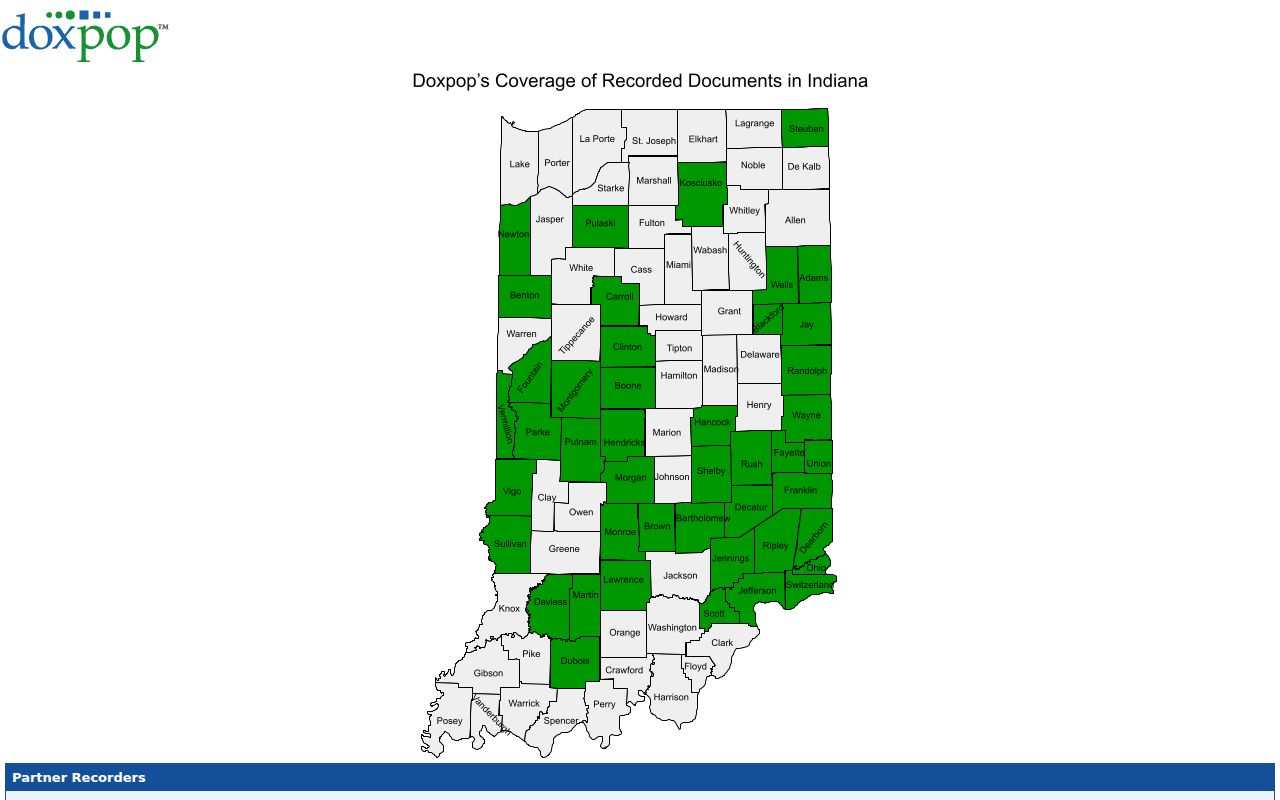
The Pulaski row makes the 1994 cutoff plain. Before that date, the search shifts to courthouse and archive sources. Note: January 1994 marks the start of Doxpop access, not the beginning of Pulaski County deed records.
Walk the Pulaski Grantor-Grantee Chain
The grantee receives the stated interest; the grantor gives it up. A chain search starts with the current owner's acquisition deed, then works backward. Each seller's name leads to a deed. That deed shows how the seller first acquired the same land. Check the parcel number and legal description at each step. This keeps a common surname from pulling the chain onto a different tract.
- Use the Assessor or WTHGIS result to obtain the present roll name, parcel number, and situs address.
- Search that name as grantee and identify the latest plausible acquisition deed. Match the legal description, not merely the surname.
- Read the grantor from that deed. Search that party as grantee in an earlier date range and match the same tract again.
- Repeat while recording instrument number or book/page, deed type, date, parties, and description changes. Follow corrective deeds, estate transfers, and re-plats.
- At the January 1994 online boundary, continue with Recorder indexes and deed books, then use microfilm or archive aids for earlier periods.
- Grantor
- The party transferring the stated property interest.
- Grantee
- The party receiving that stated interest.
- Chain of title
- The linked sequence of recorded transfers associated with one tract.
- Book/page
- A volume and page citation used to retrieve a recorded document.
- Instrument number
- A unique recording reference assigned to a filed instrument.
Legal Descriptions Keep Rural Pulaski Deeds on Track
Doxpop separates lot, block, and subdivision searches from section, township, range, quarter, acreage, government lot, and remonumentation-corner searches. Town property usually follows a named plat. Farm tracts lean on the federal survey grid or metes-and-bounds wording. A parcel or tax ID may appear when available. Copy the description straight from the deed. Do not translate it from the GIS map. Search platted property by subdivision name with lot and block, and rural land by section and township. When a transfer conveys only part of a tract or carves out an exception, carry that wording forward so the chain does not drift.
Older Pulaski Chains Continue through Books and Maps
The county dates to 1835. Official sources split between 1839 and 1840 on formal organization. The online index is a recent slice of a far longer record. The Recorder's courthouse books come first as a fallback. The Indiana State Library Pulaski guide opens the door to county microfilm, WPA indexes, maps, newspapers, wills, and the original custodians. State Library maps span Pulaski materials from 1873 through 2023. The 1906–07 Standard Atlas plats towns, villages, and townships. The 1997 plat book names city streets and adds an owner index. The LaPorte–Winamac federal land-office index can lead to an early purchase with a full land description. A federal patent marks the first federal transfer only, not the private chain that follows.
Francesville Re-Plats Explain Later Deed Language
James Brooks laid out Francesville in 1853. J.M.H. Allison re-platted it in 1862. That history explains why a later deed or published notice may cite vacated blocks, additions, or a newer plat identity rather than the first layout. It also makes the plat book a core companion to the grantor-grantee index. Named places like Bledsoe's Addition surface in legal notices and land descriptions. Treat them as leads. Verify the current parcel and the recorded plat. A notice never replaces the deed or court file, and town-history statements do not settle a legal description.
Mortgage Releases Need Their Own Pulaski Search
A recorded deed alone leaves many encumbrance questions open. A release search needs several angles. Search the owner or borrower, then the lender or claimant. Pull the local document types as well: RELEASE OF MORTGAGE, RELEASE/SATISFACTION, partial release, assignment, mechanic's lien, judgment lien, federal tax lien, easement, and court order. Use the original mortgage reference whenever it appears.
A payoff letter proves nothing at the recorder's desk. Only a recorded release clears the mortgage of record. An assignment can rename the lender before any release is filed, and a partial release may free just one slice of the described land. Match the parcel and legal description carefully, then obtain the actual instrument to read its full scope.
Note: Search a lender's earlier and later names when a mortgage was assigned or a release resists location.
Property Watch Flags New Pulaski Filings
Doxpop Property Watch offers free alerts by name or property. When a new Pulaski County recording matches an enrolled name, it sends a flag. The same goes for a matched description. Rural indexes bring a caveat, though. Repeated surnames and broad legal terms in Pulaski County deed records can trigger false positives. So treat any alert as a prompt to pull the actual document rather than proof of fraud, ownership, or a valid lien. See the Property Watch entry screen.
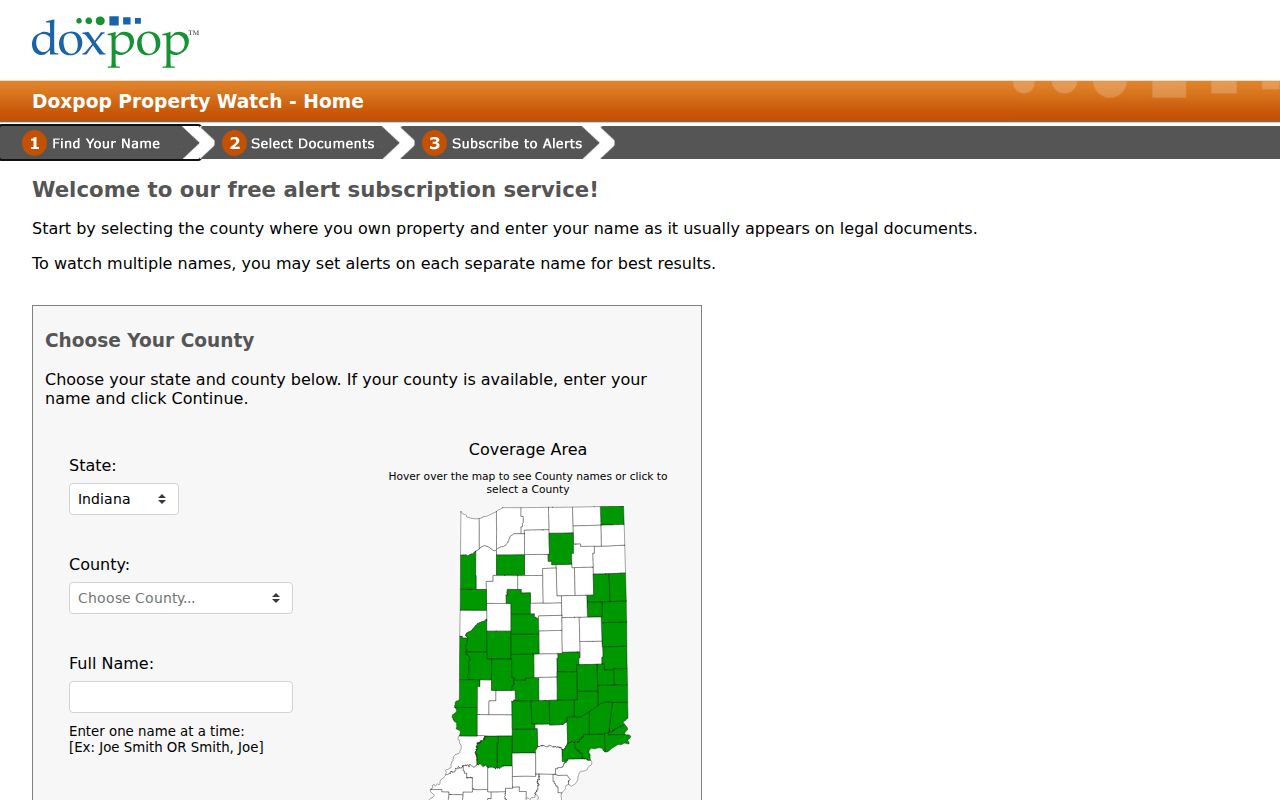
Think of the service as a monitor sitting beside the deed search. Confirmation always rests with the Recorder's record.
Courthouse and Court Records Can Cross-Check a Deed
Court files can lead straight back to a deed. Foreclosure, quiet-title, partition, probate, and tax-sale matters all generate court orders or sale documents that later connect to a Recorder instrument. Indiana MyCase helps here. It lists public case numbers, parties, chronological entries, orders, status, and some documents, though older files may not be online.
A sheriff's-sale notice carries useful cross-reference facts. An address, parcel, lot and block, case number, and court often appear in the published notice, giving you leads to verify against the court file and the recorded transfer. Neither one alone proves current title.
Obtain a Pulaski County Deed Copy
Doxpop works well for basic index discovery and available paid image detail. The maintained record lives elsewhere. Contact Recorder Marsha Tetzloff's office in Room 102 of the Pulaski County Courthouse, 112 E Main Street, Winamac, Indiana 46996, or call 574-946-3844. The office records and scans deeds, mortgages, surveys, and related instruments, and it provides plain or certified copies. Give the instrument number or book and page. Ask for a current fee estimate as well.
In-person inspection fills any online gap. A mailed request should identify the parties, approximate date, document type, recording reference, and legal description as precisely as possible. An address alone is a thin clue. Start with the Pulaski County property search to pin down the parcel and owner of record first.
Recorded, not guaranteed. Pulaski County deed records show instruments accepted for recording. The index is not a title opinion, and unrecorded interests or defects may exist, so qualified title work is needed before reliance.